HRR Foods Shows How Independent Retailers are a Great Launchpad for Emerging CPG Brands 3/10/2026

Go big or go home.
This phrase might sound good, but for emerging brands looking to scale their distribution, going too big too fast can be their undoing, as the financial and operational stakes of a massive retail rollout can crush a young company before it finds its footing. However, by starting small and scaling up organically, a brand can ease into larger markets as its capabilities and supply chain grow.
This is the sweet spot where HRR Foods, a distributor servicing the Midwest, Northeast (including my local Lincoln Market in Queens), and Mid-Atlantic, finds its niche. By focusing on the independent market – specifically retailers or chains with 10 or fewer locations – it provides a great strategic testing ground for brands to iterate, prove their sales data, and scale organically. This is especially ideal for emerging brands one finds on RangeMe or taking in-person meetings at ECRM Sessions.
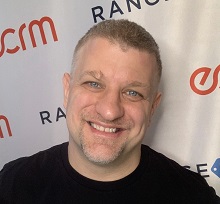
I sat with HRR Foods’ Roaldo Sulejmani at ECRM’s recent Center Store Grocery Sessions, which spanned several categories including Candy; Beverage; Snacks; Canned, Dry & Boxed Foods; Sauces, Condiments & Spreads; and Coffee Tea & Cocoa. He was there taking meetings with brands across all of these categories, and shared how the distributor provides a low-risk and cost-effective means for emerging and founder-led brands looking to grow their retail footprint.
The Strategic Power of the Independent Retail Market
At HRR Foods, 95% of its business is conducted with independent retailers. These are often small-to-medium regional chains or family-owned businesses where the owners are deeply attuned to their local markets.
Sulejmani notes that these retailers offer a unique mix that bridges the gap between different consumer segments. This mix varies by geography; for instance, the Chicago market tends to be more conventional, while the New York City metro area tilts toward natural products.
For an emerging brand, the independent retailer segment can be a goldmine. "It's easier because you have direct contact,” says Sulejmani. “You don't go through a corporate buyer. You don't go through a corporate process. Many of them are family-owned. I say the ideal retailer is the one that the grandparents started and now the grandkids run it."
Lowering the Barrier to Entry for CPG Brands
The financial reality of the big-box dream is often a rude awakening for founders. Large chains frequently demand slotting fees and trade spending which require significant capital. Independents, by contrast, offer a much more manageable entry point. "It is much easier for brands to gain distribution into independents than it is with big chains," Sulejmani says. "As we know, chains request slotting fees, free fills, and the like. It's much easier to free-fill a three-store location than a 300-store chain for new and emerging brands."
By starting with a handful of locations, brands can build a solid foundation, and then when it eventually comes time to approach a larger regional chain, having a proven track record in 80 local independent stores gives the brand a higher probability of success, as it demonstrates that they have the capabilities and resources to scale up. In some cases, Sulejmani says, it may even lead to the larger retailer reaching out to the brand.
'It is much easier for brands to gain distribution into independents than it is with big chains.'
The "Fail Small" Philosophy: Iteration and Agility
One of the most critical advantages of working with a distributor like HRR Foods is the ability to work out "kinks" in the process. In the early stages of a brand's life, mistakes are inevitable—whether they occur in the supply chain, the packaging, or the pricing strategy.
Sulejmani is candid about the risks of scaling too quickly. “I hear this all the time: 'We are going to be in Walmart, we're going to be in Target.' You can. It's possible, but it’s not recommended. Unless you have hundreds of thousands of dollars to back you up. you will fail. Independents allow you to naturally and organically build up your retailer landscape. When you're working with an independent retailer and you make a mistake, it's very easy to fix. If you make a mistake with a chain, it’s very difficult and very costly to fix."
By iterating in a smaller environment, brands can use real-time feedback from buyers and consumers to make quick, cost-effective adjustments.
Reducing Costs & Risk With Direct Drop Ship
To further lower the risk for emerging brands, HRR Foods has introduced a Direct Drop Ship program. This model is designed to address the issue of a brand shipping massive amounts of inventory to a warehouse only for it to sit unmoved.
Under the Direct Drop Ship model, HRR Foods handles the logistics of invoices and purchase orders, but the product is shipped directly from the brand to the retailer in smaller quantities. This allows brands to test a new region – like Chicago or New York City – without committing to full pallets of every SKU.
"If you're a new brand, and we were to commit 4 SKUs at 150 cases per pallet and only 10 cases sold, we would have 140 cases of each SKU spoiled, expired, or we're going to have to discount it so heavily to get rid of it," says Sulejmani. "Direct Drop Ship is the quickest, easiest, and in my opinion, low risk as a distributor and as a brand.”
This approach allows brands to dip their foot in the water and prove their viability before committing to the heavy overhead of traditional warehousing. Sulejmani’s goal is that once a brand has gotten into 40, 50 or 60 retailers, he takes them off Direct Drop Ship and transitions them into the warehouse for weekly deliveries.
Decoding the 'Everyday Consumer'
A common pitfall for emerging brands, according to Sulejmani, is misidentifying their target audience. He notes that many founders describe their consumer in vague demographic terms, like "middle-aged male," which provides little actionable insight for a buyer.
More importantly, many brands focus so heavily on certifications like Organic or Non-GMO that they forget about the everyday consumer who isn't shopping for status, but for their shopping list.
"The average everyday consumer doesn't wake up in the morning and say, 'I want the sugar-free non-GMO organic,’” says Sulejmani. “Those are great product traits, but we also have to look at who actually goes to those grocery stores. The everyday person is usually a couple, a family person, someone who gets up in the morning and says, 'I'm out of pasta, I'm out of tomato sauce.' If the average person goes into a grocery store because they need a refill with everyday essentials and you want to stand out, your packaging is the only thing that's going to scream to them."
For HRR Foods, packaging factors heavily into its decision on whether or not to carry a brand. Sulejmani looks for products that will catch a shopper's eye as they grab staples like eggs, rice, or yogurt. “If the packaging doesn't look tasty or professional enough for a consumer to pick it off the shelf, the potential of the product is lost,” he says.
Mastering the ECRM Buyer Pitch: 10 Minutes to Success
Having attended 50 ECRM sessions, Sulejmani has a refined perspective on what makes a successful pitch. He notes that the ECRM format is particularly effective because it facilitates better engagement compared to traditional massive trade shows.
"I get a higher return on interest here than I do at any other trade show," he says. "I do go to Expo West here and there and I'm walking around booths and I'm throwing business cards at the brands. And I might get 20, 30, 40 emails back. But when I'm at ECRM, the week after, I get 80 to 100 emails back."
His advice for founders participation in ECRM sessions? Respect the clock and focus on the data. "I think 10 minutes is more than enough for me to understand if your brand is capable for us to assist them in distribution or not," says Sulejmani. "But if we have 10 minutes, I don't want to hear nine and a half minutes of your backstory. I want to hear a maximum of one minute, and then I'd say about four minutes about numbers or projections. That allows me about five minutes left in that meeting to ask questions."
Sulejmani is looking for brands where he can add value. He isn't interested in a product that is a commodity like standard mayo or ketchup. He wants the new, the emerging, and the brands that need a distributor's assistance to break into new territory.
Conclusion: Building for Longevity
The journey from a home kitchen to a regional powerhouse is paved with strategic decisions. By leveraging the agility of independent grocers and the innovative distribution models offered by HRR Foods, emerging brands can build the sales data and operational stability required for long-term growth.
As Sulejmani puts it, starting small isn't a sign of low ambition, it's a sign of a smart business. It’s the difference between building a house on "crumbling concrete" and building a brand that can eventually stand tall among the giants.
You’ll find HRR Foods at most of ECRM’s Food & Beverage Sessions.
Watch my full interview with Roaldo in the video below, or listen to it on our podcast: Winning Pitches with RangeMe & ECRM!