Design & Innovation Drive Target’s Private Label Food and Beverage Strategy 5/27/2026

The modern retail landscape is experiencing a profound shift as store brands evolve from budget alternatives into curated, trend-forward products capable of commanding genuine loyalty.
At the forefront of this grocery transformation is Target, which has instituted a mandate to lean heavily back into what the retailer has historically been celebrated for: a commitment to style and design. This design-centric philosophy is now being aggressively applied to Target’s own brands, and orchestrating this ambitious strategic evolution within the grocery division is Katherine Guarino, Target’s Director of F&B Owned Brand Merchandising.
Guarino brings a wealth of industry expertise to this pivotal role, having built a distinguished career within the consumer packaged goods (CPG) sector at multinational powerhouses including PepsiCo, Frito-Lay, and General Mills. Throughout her career, her responsibilities involved managing and scaling household brands like Doritos, Cheerios, Totino's, and Old El Paso. This deep CPG pedigree grants her an exceptional understanding of brand strategy and large-scale execution, allowing her to shape proprietary offerings across the entirety of Target's private label value pyramid with national-brand quality.
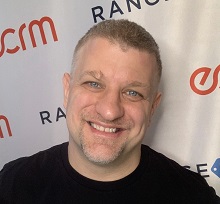
In a fireside chat at the recent ECRM’s Private Label Sessions, moderated ECRM SVP of Retail Wayne Bennett, Guarino pulled back the curtain on the operational mechanics that fuel Target’s private-label grocery success. During the discussion, she outlined the relationship between category merchants and own-brand buyers, introducing the operational trifecta – a partnership between sourcing managers, food scientists, and merchants that leverages "productive tension" to deliver innovative items at accessible price points.
The conversation provided an in-depth look at Target's core brands – Good & Gather, Favorite Day, and Market Pantry – while identifying immediate commercial white spaces available for agile suppliers within the frozen food and kids' segments.
Organizational Structure & The Operational ‘Trifecta’
ECRM: To start us off, Katherine, could you give our audience insight into how your team is structured and operates within Target's broader merchandising ecosystem?
Guarino: My team includes buyers and senior buyers aligned to our owned brand portfolio, each handling specific categories like snacks and candy. We work with category merchants, who set the macro strategy for an entire category across national and private brands. Our buyers ensure our private label strategy fits seamlessly within that vision while owning the P&L statement.
Second is the internal trifecta – a partnership between sourcing managers, product development scientists, and owned brand merchants. While buyers lead cross-functional teams across design and marketing, the interaction within this trifecta drives our success. Merchants define trends and target retail price points, sourcing secure manufacturing partners and viable cost structures, and food scientists focus entirely on delivering the highest quality formulation possible on the shelf.
ECRM: Target has a reputation for being innovative and design-forward. How do you balance the creative side of product development with the financial realities of global sourcing?
Guarino: Maintaining high design standards comes with a real commercial cost; being first-to-market with trend-forward items is expensive, creating productive tension within our trifecta. I might establish an ambitious expectation regarding where our owned brands need to go from an aesthetic or culinary perspective. In response, our product scientists provide a technical reality check on formulation constraints, while our sourcing team determines whether we can execute this vision at a cost that aligns with our business model and replicate it reliably at scale. Navigating that back-and-forth dialogue is a healthy friction that forces us to refine our concepts and ultimately helps differentiated items land on our store shelves.
ECRM: I want to highlight the food scientists working within your teams. How do you view their role in the context of building and maintaining brand trust?
Guarino: Our food scientists are the heart and soul of our team. Nothing else matters if product quality isn't there. If taste, texture, or quality fail, consumers notice immediately. A subpar private label experience risks losing a guest's trust across the entire retailer. Quality drives consumer retention, and our teams ensure we nail execution every time.
Brand Architecture & The Value Pyramid
ECRM: Could you explain the distinct strategic jobs that Good & Gather, Favorite Day, and Market Pantry perform for the Target guest? How do you identify product gaps?
Guarino: Our three owned brands occupy precise pillars. Good & Gather is our accessible wellness brand, formulated without over 100 unwanted ingredients. Favorite Day is our mindful indulgence brand, elevating celebratory moments with sweet treats and bakery items. Market Pantry is our opening price point leader, delivering reliable, quality staples at competitive prices. We are not launching new sub-brands. Instead, we are evaluating our current assortment to deliver on shifting consumer desires within our existing brand architecture, focusing on wellness innovation, seasonal discovery, and macro-trends.
ECRM: Looking beyond protein and fiber, what major macro-trends are you currently observing within the food and beverage industry?
Guarino: The industry is shifting with immense velocity. From a wellness perspective, we see compelling movements within the coffee space, which has become a massive vehicle for innovation. Products are emerging featuring advanced functional claims, such as infusions of collagen, moving rapidly from niche health channels into the mainstream.
However, it does not always make strategic sense for an owned brand to immediately jump into every emerging trend. We must ask: Does our specific Target guest care about this trend, and do we possess the baseline brand credibility to stand for it? Highly complex functional claims often require extensive consumer education. National brands possess the marketing budgets for that education, whereas our packaging is our primary billboard. We must be selective, ensuring we scale trends only when the consumer is ready and the proposition is clear.
ECRM: How are you currently structuring your operational focus across wellness, seasons, and trends, and what role do external creative partnerships play?
Guarino: We approach these pillars as distinct avenues to surprise and delight our guests. Within wellness, we explore what accessible wellness means to our shoppers, tracking upcoming functional needs. For seasons and occasions, our goal is to inject a discovery mindset into the guest experience, utilizing Favorite Day to offer limited-edition, experiential items that drive excitement during key times of the year. Our third pillar is trend, and this is where bold partnerships become highly valuable.
We have been leaning into the collaborative space intentionally, executing successful Good & Gather culinary collaborations with prominent chefs. Furthermore, we are leveraging cross-category synergy across Target’s broader ecosystem, such as partnering with our highly successful home brand, Hearth & Hand with Magnolia Table, to launch curated food items. This allows us to think broadly, evaluate product concepts against these pillars, and determine which brand provides the most authentic alignment.
.JPG)
Supplier Dynamics & Innovation As A Team Sport
ECRM: When a vendor walks into a pitch meeting with your team, what are the absolute operational must-haves they need to present beyond a great-tasting product?
Guarino: The single most critical differentiator is a genuine willingness to actively collaborate and co-build products alongside us from the ground up, rather than presenting a pre-existing item off a standard catalog shelf. In terms of rigid operational must-haves, there are several requirements.
First is compliance with our ingredient standards; Good & Gather formulations must avoid the one hundred plus prohibited ingredients. Second is sustainable packaging, demonstrating how their structural packaging aligns with Target's corporate commitments to reduce plastics and increase recyclability. Third, a partner must meet our specific cost targets while demonstrating the robust supply chain capacity to scale production efficiently for our retail footprint. Finally, every partner must maintain a valid Global Food Safety Initiative (GFSI) audit. It is that combination of operational excellence and total transparency that defines a true Target partner.
ECRM: You've stated that "innovation is a team sport." What does that philosophy mean in practical terms, and why is this critical for external suppliers to understand?
Guarino: It means true retail breakthrough requires the intentional co-building of concepts between the retailer and the vendor. This is an incredibly energized time for the food and beverage industry, and a phenomenal moment to be a supplier working with Target. Our organization is actively seeking innovation more aggressively than ever before, and our doors are wide open.
In practice, we expect vendors to bring forward proprietary consumer insights and market analytics. When building, we love to see suppliers leveraging modern digital tools, such as AI, to rapidly generate packaging mockups that help our cross-functional teams clearly visualize a concept. Innovation also includes structural packaging; we look at brands like Graza as prime examples of how disruptive packaging formats can completely revitalize an established category. We want suppliers to think dynamically about both the product and the vessel.
ECRM: On the flip side, what are the most common operational gaps or structural deficiencies that you observe among suppliers today?
Guarino: The single biggest gap is when vendors operate reactively rather than anticipating market shifts. The retail ecosystem is evolving at a breakneck pace, particularly on the regulatory front. We want partners who come to the table proactively tracking the regulatory pipeline with an operational plan to address it.
The same requirement applies to supply chain impacts; if a vendor foresees a major macro commodity disruption, they need to approach us proactively with a mitigation strategy. The second gap is operational speed. Because consumer trends shift with such velocity, we need partners who can move faster across product development, packaging authorization, and supply chain execution. The third gap is sustained innovation muscle. Suppliers must possess the internal capabilities – or seek strategic partnerships – to innovate not just for tomorrow’s order, but for a three-to-five-year growth horizon.
(See our recent blog, From Pitch to Shelf: How to Scale Your Supply Chain After Your First Big Retail Win for more insights on how to optimize your supply chain to accommodate retail deals.)
Emerging Categories & Future Trajectory
ECRM: Are there two or three immediate, high-priority business opportunities or specific grocery categories currently sitting on your desk where Target is actively seeking a completely fresh approach from vendors?
Guarino: Top of mind is the frozen food category. I see an enormous, untapped opportunity to completely reinvent and revitalize the frozen aisle, driving meaningful convenience at an accessible price point while delivering the functional wellness benefits guests crave through elevated frozen meals. The second immediate priority is the kids' space and products tailored explicitly for busy families. Target made a powerful corporate statement declaring that we are going after busy families with intense focus. The baby category at Target is already huge; our strategic challenge now is building a continuous pipeline that retains those parents as their children grow. If a supplier can bring us convenient, high-quality kids' frozen meal solutions or general product ecosystems designed to simplify life for busy families, we want to hear from them immediately.
ECRM: What excites you most right now about the future trajectory of Target under this new executive leadership team?
Guarino: From a macro perspective, it is our revitalized commitment to leading boldly with style and design. That aesthetic excellence is exactly what Target has always been known for, creating an inherent sense of joy, discovery, and premium execution within our stores. Secondly, owned brands are currently at the absolute top of everyone's strategic agenda. Executive leadership recognizes that the best way to express style, design, and exclusive value in the grocery space is through powerful owned brands. We are proud of our portfolio, creative expressions, and packaging, and we are focused on matching that with the perfect product assortment. Finally, I am energized by our organization's focus on operational speed. The conversation has completely shifted away from hesitating over timelines toward a bias for action and velocity. That empowerment makes this an extraordinary time to build the future of food retail alongside our vendor community.
Editor's note: For insights on the private label shopper, check out our RangeMe blog post, 7 Ways Private Label Brands Are Redefining Retail Loyalty, covering the presentation given by PDG Insights' Diana Sheehan at the ECRM Private Label Summit!