Industrias T.TAiO Proves That TikTok’s Not Just for Emerging Beauty Brands 4/9/2026

Emilio Smeke, CEO of beauty brand Industrias T.TAiO, took his viewers on a virtual tour of Rossmann stores in Budapest to showcase his product, Esponjabon (a soap-infused sponge) which at the time had recently landed on the shelves.
He recorded himself at the airport with his suitcase and boarding pass, then on the plane, documenting each step along the way. He then mapped out a walking route that would take him to a dozen Rossmann’s locations, checking out his products at each, happy to see that many were almost sold through. He then uploaded the video to TikTok, tagging the retailer.
It received almost a half million views.
What’s interesting is the fact that Industrias T.TAiO is not a new brand with a young founder, the kind you would typically see on TikTok. It launched in 1985, 30 years before TikTok even existed. However, Smeke’s ability to adapt to the TikTok era has turned Esponjabon into a global sensation with an intensely-devoted following, whose posts have driven so much store traffic that some retailers have been forced to implement purchase limits on the products.
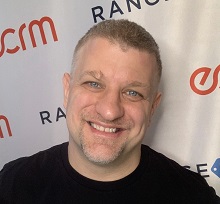
I sat with Smeke at ECRM’s Beauty Sessions in Dallas, to learn more about how his established brand (which is also a RangeMe Pro subscriber) has evolved to incorporate social media into its go-to-market strategy to drive sales at the retail shelf.
Industrias T.TAiO Was Born Out of a Disaster
Once you learn Industrias T.TAiO’s origin story, it’s easier to understand how the company has been able to adapt to today’s social media landscape. Indeed, the company’s roots were founded in adaptability and resilience, as it was born out of a literal disaster.
"Back in 1985 in Mexico, there was a big earthquake," says Smeke. "My dad and my brothers used to manufacture kids' clothing, and the two buildings that my family had collapsed. They were able to pull machines used for making socks from one of the buildings. But when they ran the machines, they said, 'This is not a sock. This looks like a scrubber.' So if life gives you lemon, you make lemonade. We decided to make scrubbers. One product was a back scrubber, then we expanded to two products, then five."
Fast forward to today, the company employs several hundred employees across seven different facilities making more than 600 SKUs including soaps, car sponges, household sponges, loofahs, personal care products and even mattresses and pillows. It has had very strong sales in Mexico across the drug and mass channels since its inception, and moved to the United States 20 years ago.
Industrias T.TAiO now has several different brands under its umbrella. "We have Afterspa, which is our opening price point brand, personal care, kind of like everything from wellness to personal care," says Smeke. "Then we have Daily Concepts, which is our luxury kind of premium innovative brand."
But it was Esponjabon that would eventually catch fire on TikTok, and get Smeke started on his digital journey.
Esponjabon Becomes a TikTok Viral Sensation
The brand’s viral TikTok moment began in 2020 when a consumer’s organic post took off. A woman from Orange County traveled to Mexico, purchased Esponjabon, and posted a TikTok video claiming it cleared her acne that was caused by wearing masks during the pandemic.
It saw millions of views, and its impact at the shelf was immediate. At the time, the brand was stocked in CVS, and the demand became so high that stores began limiting consumers to only three pieces per person. To keep up, Smeke had to scale manufacturing at a breakneck pace. "Originally, the facility was producing about 40,000 pieces per week,” says Smeke. “We got to the point of making 200,000 pieces a day to keep up with the demand.”
Since then, Smeke has been a huge proponent of leveraging the power of TikTok to drive traffic to those stores that sell his products. Industrias T.TAiO manages its social media presence in-house and employs a dedicated content creator and brand ambassador, Amanda Mejia.
Mejia’s role is multi-faceted, and includes:
- Sourcing Influencers: Finding the right niche creators who actually use the brand.
- Managing Platforms: Handling the nuances of TikTok, Meta (Instagram Reels), YouTube Shorts, and Reddit.
- Retail Fieldwork: She visits stores in-person to create content whenever a new retailer is landed.
- Vetting for Authenticity: Ensuring that sponsored content doesn't feel forced. If a video feels inauthentic, the team chooses not to post it, even if they have already paid the influencer.
Smeke doesn’t shy away from the camera either, and posts his own content as well. As with the Budapest video, he’ll often post videos from stores or will simply document his journey as the company’s CEO. “Authenticity is really important,” he says. “You can tell if an influencer's just getting paid to do something.”
The ‘Secret Sauce’ for Driving In-Store Sales
Smeke is transparent about the fact that while the initial spark on TikTok back in 2020 was organic, maintaining that momentum requires a deliberate strategy, which he boils down to three pillars:
1. The Product Must Perform
Before any marketing happens, the product must be innovative and functional. Esponjabon is inherently "TikTokable" because it’s functional, uniquely packaged, and offers a tactile, sensory experience that influencers love to show on camera.
"You have to have an innovative product,” says Smeke. “It needs to work. You cannot just say, 'Oh, this is a miracle product.' For example, the pink Esponjabon has a hyaluronic acid. So when we start posting on social media and that user sees that it worked for somebody else, they go get it and they start using themselves. Then they swear by it and start posting about it themselves.”

2. Choose Niche Influencers over Mega-Celebrities
T.TAiO does not chase the biggest names on TikTok. Instead, it focuses on finding creators who authentically inhabit the beauty, wellness, and skincare space. It uses the TikTok Shop Affiliate Program, which allows creators to sample products and earn a commission on sales, creating an army of advocates.
“They create a wonderful program where you sample the products and the affiliates talk about it on TikTok and they start recommending the product,” says Smeke. “If they are able to make sales out of those videos that they created with your product, then they get a commission.”
(Harley Sutton, Founder of Thanks! Naturals, is also a big proponent of TikTok’s affiliate program, and sends out 200 samples a week. I also spoke with her at the Session and you can see our interview here.)
3. Activate Retail Accounts
The most critical part of T.TAiO’s strategy is explicitly connecting digital content to the physical shelf. When a user posts about the product, Smeke’s team ensures the retailer is part of the conversation, and as noted earlier, Smeke and Mejia complement this with their own personal in-store activations on TikTok.
"If somebody bought it in HEB and they talk about it, of course we're going to tag HEB," Smeke says. "However, it’s important to know that you also need to perform at the store level. Your price needs to be right, your packaging has to be right.”
At its core, what TikTok has become for T.TAiO is simply a high-speed, high-scale version of the most powerful marketing tool in history: a personal recommendation. "If your best friend says, 'Hey, this is awesome,' you're going to try it no matter what,” says Smeke. “But that has been going on forever.”
The ECRM Connection: Building the Relationships Behind the Shelf
Despite the massive digital success, Smeke emphasizes that you cannot drive in-store sales if you don't first have the relationships with the buyers who put you on those shelves. Having attended 25 ECRM sessions over 20 years, Smeke views face-to-face meetings with buyers as an essential foundation for his retail footprint, and has landed several deals from his meetings with buyers at Sessions in the U.S. and Europe and is a big fan of the format.
“You get to see them all at once,” says Smeke. “This is where you get their attention in one same spot. “ECRM has had everything well organized since Day 1. I think it’s state of the art how you make this happen.”
Equally important for Smeke is the wealth of networking opportunities available at each Session, and he never misses an opportunity, whether it's connecting with others during meals, at educational presentations, cocktails, or store tours, like the Retail Rodeo Scavenger Hunt that was launched and hosted by Emily Page of Start to Sold, which coaches CPG brands on how to scale at retail. Brands and buyers were broken up into several teams, which toured three different retail stores. Each team had a Bingo card filled with different retail and merchandising concepts, and to scratch one off their card, the team had to take a selfie in front of the concept. Smeke’s team, called Super Beauty, took second place.
“Don’t miss any of these social events,” says Smeke. “You get to know participants on a personal level. Many of the times we're having breakfast, we're having lunch, we're having dinner with them. We're having a couple of drinks with them. So you get to know also the person that is behind that retailer, that distributor, and also makes you understand how the business works. So that gives you an advantage of how to move forward with them.”
Watch my full video interview with Emilio Smeke below!
Comments
Thanks for sharing our story Joe! we take a lot of pride and love in what we do! :) Let's shower the world with Love!


