Inside Lakanto’s Multi-Category Monk Fruit Empire 10/27/2026

Once a specialized secret of low-carb communities, monk fruit has surged into the mainstream to become one of the world’s premier natural sugar alternatives. As health-conscious consumers move away from synthetic sweeteners in search of clean-label, plant-based foods, monk fruit offers an ideal solution.
Sweetened by mogrosides – potent antioxidants rather than sugar – it delivers zero calories, zero carbohydrates, and has a zero glycemic index. By providing rich sweetness without spiking blood glucose levels, it has become an essential staple for diabetics and dedicated followers of keto and paleo diets alike.
Beyond its health benefits, monk fruit's rapid adoption is driven by a distinct taste advantage over other sugar substitutes, bypassing the bitter, licorice-like, or metallic aftertastes for a remarkably clean, sugar-like flavor.
This makes it equally effective in home baking recipes and commercial product formulations. Today, monk fruit sweetens everything from ready-to-drink teas and protein powders to low-sugar ice creams. In the U.S. market, the dominant brand and largest consumer-facing monk fruit product company is Lakanto.
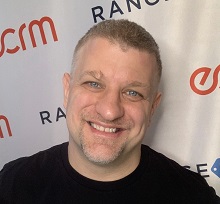
I sat with Lakanto’s Chief Sales Officer Matt Manning during the recent ECRM Food & Beverage Sessions in Dallas to learn the interesting history of the brand, the variety of monk fruit-sweetened products in the market, and how the brand takes feedback from its buyer meetings at ECRM Sessions to develop new products (they have been to 50+ Sessions to data). You can watch our full interview below.
Let Them Eat Cake: Lakanto’s Origin
When Shota Saraya, Founder of Lakanto parent company Saraya, received a diabetes diagnosis, he had already built a thriving Japanese enterprise centered around natural soaps, personal hygiene products, and sanitizers. Confronted with a life-altering condition that stripped away the simple joy of having a dessert, Saraya refused to settle for the synthetic sweeteners dominating the era.
In the late 1980s, monk fruit – a small, sub-tropical melon native to Southeast Asia and cultivated for centuries by Buddhist monks – was virtually unknown in commercial Western food science. Saraya's research team isolated its sweet-tasting compounds, mogrosides, unlocking intense sweetness without the glycemic impact. By the early 1990s, Saraya launched the first monk fruit sweetener ever commercially developed.
For two decades, the product line in Japan consisted of a single, highly specialized SKU: a raw cane sugar substitute engineered specifically for traditional Japanese home cooking and tea culture. It was not until Saraya established North American operations in Salt Lake City, Utah, that the brand adapted its core offering to Western baking and coffee habits.
"In Japan, the typical sugar used is raw cane sugar,” says Manning. “So he created that raw cane sugar replacement. When he wanted to open in the U.S., he knew the U.S. base was more of a white sugar consumer, and so he created the white sugar replacement for that. So there were those two SKUs that started everything here in the States."
Beyond the Bag: Designing for the Diabetic Community
Once established in the American market, Lakanto quickly confronted a universal consumer hurdle: a standalone bag of granular sweetener was rarely enough to sustain long-term dietary modification. Expecting consumers to reverse-engineer standard recipes often resulted in culinary frustration and eventual relapse into high-sugar habits.
Saraya viewed product development through the lens of community service rather than conventional corporate scaling. "For him, we kind of joke, he would always talk about creating projects or products for his community, for his people," Manning says. "And it wasn't the Japanese people, it was his diabetic community. He saw the struggle. He knows how difficult it is for someone to get that diagnosis and suddenly you've got to change everything. And so he realized that, and instead of just offering a sweetener and saying, 'Hey, figure it out people,' he wanted us to create different products that would make it a little bit easier for that community."
This ethos transformed Lakanto from a dry-goods packaging operation into a comprehensive food innovation hub. The strategy was straightforward: wherever sugar was used as a primary ingredient, a monk-fruit-based alternative could potentially eliminate friction for people with metabolic disease.
The product lineup diversified rapidly:
- Flavored Simple Syrups: Offering alternatives for morning coffees, teas, and cocktail bars, including popular caramel and vanilla profiles.
- Maple-Style Syrup: A clean breakfast staple specifically designed to avoid blood-sugar spikes. "For breakfast folks, if I'm having some pancakes and waffles, I've got to be careful with that sugar intake," Manning says. "Maple syrup, as natural as it is, is wonderful and tastes great, but it will spike blood sugar, which could be a deadly thing for a diabetic. So this is an all natural maple syrup replacement utilizing monk fruit at its base. Tastes like syrup, performs like syrup, smells like syrup, all natural ingredients."
- Craft Mocktails and Sodas: Ready-to-drink functional beverages in flavors such as Cucumber Mojito and Peach Bellini, tapping into the alcohol-free and functional beverage movements without relying on artificial colorings or sugar.
- Liquid Monk Fruit Drops: Ultra-concentrated table drops catering to clean-label purists and regional traditions. "When I say liquid monk fruit, I mean pure monk fruit, which on its own is 300 times sweeter than sugar, very potent," Manning explains. "We're asking you to do two to four drops at a time. I'm from Houston, Texas. We love our sweet teas, sadly a little too much. And I'll put some drops of our original flavor in there. It makes a delicious sweet tea."
- Pantry and Confectionery Staples: Baking mixes, sweet-and-savory candied nuts, and monk-fruit-sweetened chocolates, bridging the gap between clinical restriction and indulgent indulgence.

The Chemistry of Sweetness: Texture, Potency, and the R&D Sandbox
Replacing sucrose is one of the most notoriously complex tasks in food formulation. Sugar provides bulk, structure, moisture retention, browning, and mouthfeel – qualities that cannot be duplicated by simply swapping in high-intensity sweeteners.
Because monk fruit mogrosides are up to 300 times sweeter than sucrose by weight, a recipe requiring one cup of sugar cannot be replaced with a single cup of raw monk fruit; the result would be overwhelmingly sweet and structurally empty. Consequently, monk fruit must be blended with natural carriers like erythritol or allulose to deliver a 1:1 functional sugar equivalent.
"As much as we want to mimic sugar, you can't copy it 100%," Manning says. "So there's components to sugar that allow for perfect baking, for glazing, for things of that nature that as much as we try to, you can't emulate it 100%. We can get close. So it's always an experimentation. I'll tell people, 'Hey, start at that one-to-one level and then just adjust to whatever your flavor is, to how sweet you want it, to what you need it to do.'"
Not every kitchen experiment translates into a viable commercial SKU. Lakanto’s research and development division operates with wide creative latitude, allowing them to fail forward in their product "sandbox."
"Boy, we have tried gummies," Manning admits. "And there's some great companies out there that are making some allulose-based gummies, which is a sugar-free component and works much better. Monk fruit is just very strong and usually has to be paired with an allulose or erythritol. And so we've ventured into a few things that weren't successful. The R&D team loves their job because we let them play, go to the sandbox and figure some things out. Not everything's a hundred percent success, but the fact that he allows us to venture and explore is awesome."
The ‘65-to-20’ Principle: Pragmatic Sugar Reduction
In the contemporary food landscape, monk fruit has migrated from hospital-adjacent dietary aisles into the mainstream health and wellness consciousness. Consumers today seek out natural sweeteners for ketogenic diets, weight management, inflammation control, and athletic conditioning.
Manning views this shift through a practical lens, acknowledging that whether consumers arrive at sugar reduction by lifestyle choice or medical urgency, the transition away from the modern diet is jarring.
"I always use the phrase, whether by choice or by force is someone ending up in this sugar-free exploration," says Manning. "And to go from a sugar-laden Western diet into a reduced sugar or sugar-free landscape is not the easiest transition to make. Again, whether you're told you need to or you're trying to choose a better way, our hope is that a multitude of resources would help that individual figure out that path to get to a healthier them."
Crucially, Lakanto avoids an all-or-nothing, zero-carbohydrate dogmatism. Manning emphasizes practical public health harm reduction rather than absolute abstinence. “One of the things we talk about is on average, the American consumer pulls in 65 pounds of sugar a year,” he says. “You talk about that all at once, it seems astronomical. If I can help folks cut that down to 20 pounds a year, then I'm doing what Mr. Saraya wants us to do in helping folks pull that sugar down. I'm not going to zero. It's to help someone get through the excessive amounts that are out in our foods on a regular basis where we wouldn't even think sugar is there."
Buyer-Led Product Strategy and the Long Retail Horizon
Lakanto’s multi-category footprint has been driven largely through disciplined, collaborative retail relationships rather than speculative, top-down consumer launches. For nearly five years, the company has utilized curated merchant-supplier platforms like ECRM Sessions to interface directly with category buyers from major chains such as Walmart, Kroger, Meijer, and H-E-B.
Instead of traditional, crowded trade expos where brand representatives wait at booths hoping for foot traffic, Manning favors structured, time-compressed business meetings that focus on retailer pain points.
"What I love are these scheduled appointments with exactly who you know you're meeting with, why you're meeting with them, and you know how long it is," Manning says. "I love a casual conversation, but this allows for a very quick casual conversation, but really to the point discussion about what their needs are and if we can fulfill those needs."
When sitting down with merchant buyers, Manning avoids heavy, slide-deck presentations in favor of active listening and co-creation. "On my end, it's very little presentation,” he says. “It's mainly me getting to know that entity, what their reason is in terms of meeting with me. Maybe they don't know why they're meeting with me. So it's that kind of exploration into what that is. I'm mainly concerned with not forcing our hand into what you're doing, but saying, 'Hey, in conjunction with what your goals are, where can we fit into that?'"
This retail feedback loop directly informs Lakanto’s product pipeline. The brand’s flavored syrup lineup, for instance, was driven entirely by regional buyers reporting specific gaps in their local shelf displays.
"If I made all the decisions on the flavor profiles, they would probably not be the best decisions," Manning notes. "So I'm going to let the buyers dictate to me what they hear from their consumers. And really each retailer could be very different. Their shoppers could have a different flavor profile. Their regions, based on where they're at, could have a different desire. So it's listening to that and trying to determine what's best for that market."
Manning also notes that navigating retail distribution requires patience. First meetings rarely produce immediate contracts; placing an innovative CPG item on grocery shelves routinely takes 12 to 18 months of rigorous testing, packaging adjustments, and persistent follow-up.
"I wouldn't have met very specific buyers from H-E-B, from Meijer, from Kroger, from Walmart had it not been for ECRM," says Manning. "A no is not always a no. It's ‘not now.’ And then you come back, you see them again, see where you left off, and then see how you can move forward, make an adjustment here or there, packaging, new flavor, whatever, until you really get it right."

The Next Generation: Protein Fortification and GLP-1 Support
As consumer dietary habits evolve, Lakanto is broadening its portfolio beyond simple sugar substitution to address larger metabolic shifts. One of the company's major current initiatives is formulating protein-infused pancake and waffle mixes designed to pair seamlessly with its sugar-free maple syrup line.
This focus aligns directly with the widespread rise of GLP-1 receptor agonist medications (such as Ozempic, Wegovy, and Mounjaro), which have fundamentally altered how millions of consumers approach appetite, macronutrient density, and calorie intake.
"Constant innovation, it doesn't stop," Manning says. "Currently we're working to pair with the maple syrup, we're working on a protein-infused pancake and waffle mix. Again, protein, protein, protein – the big GLP-1 factor. We're looking at supporting those pieces. We do see the history of GLP-1 has a very successful rate in helping people to drop their weight, but there's reports coming back that as soon as they get off that, they seem to rebound just the same as anything else. And so our intent is to help to, 'Hey, you've maybe dropped off that piece, but let's maintain the other parts of what you can control.'"
As patients taper off weight-loss medications, dietary discipline and lean muscle preservation become critical to preventing metabolic rebound. By fortifying staple foods with high-quality protein while eliminating insulin-spiking sugars, Lakanto aims to provide nutritional tools that support sustainable, long-term health.
Looking further ahead, Lakanto is continuing to explore new baking mixes, expanded lines of premium chocolates, and additional wellness brands from the broader Saraya Corporation portfolio, which encompasses clean cosmetics, body lotions, and organic hygiene solutions popular across Japan.
"There's always opportunities," Manning says. "We're looking for ways to create what we feel would be useful to the American public in terms of taking back their health, taking back your own responsibility of taking care of yourself and what needs to happen. We all struggle in different ways. So being able to have some tools in our hands that may support us in that effort, that's what we're hoping to do."
Executive Overview and Core Themes
- Origin and Purpose: Founded out of Japan by Saraya Corporation’s Yusuke Saraya following his personal diabetes diagnosis in the late 1980s, Lakanto originated as the world’s first commercial monk fruit sweetener before expanding into the U.S. in Salt Lake City, Utah.
- The "Community-First" Catalyst: Rather than asking consumers to navigate dietary overhaul alone with a single raw sweetener, Lakanto diversified across everyday pantry categories, including simple syrups, maple-style syrup, mocktail sodas, liquid extracts, candied nuts, chocolates, and baking mixes.
- R&D Realism and Food Science: Monk fruit extract is roughly 300 times sweeter than sugar and lacks the bulking and caramelization properties of sucrose. Formulations require balanced pairing with ingredients like erythritol or allulose, embracing trial-and-error in R&D sandbox testing (such as gummy formulation setbacks).
- Public Health Mission: Shifting away from dogmatic zero-sugar mandates, the brand champions realistic harm reduction: working to slash the average American intake from 65 pounds of annual sugar down to 20 pounds.
- Retail Co-Creation Model: Lakanto leverages structured, relationship-first trade platforms like ECRM to let grocery buyers (including Kroger, Walmart, H-E-B, and Meijer) dictate flavor profiles, product formats, and regional preferences over 12-to-18-month commercial cycles.
- Future Frontiers: Expanding beyond classic low-glycemic foods into functional lifestyle categories, including protein-fortified bakery mixes designed to support satiety and nutritional maintenance for consumers navigating GLP-1 weight-loss medications.