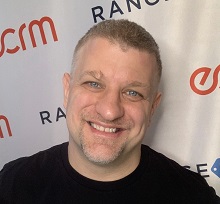
From UFC Champ to CPG Founder: TJ Dillashaw Enters the Retail Arena 10/20/2026

If you are a UFC fan, you no doubt know who TJ Dillashaw is.
A 2x UFC bantamweight champ, he is known for some of the most engaging MMA fights in the Octagon. Now retired from fighting, his new arena is retail, and instead of punching, kicking and choking, he’s pitching buyers and closing deals for his line of wellness products under Wild Society Nutrition.
These products include protein powder, a protein and hydration drink, a longevity mix and his grass-fed ribeye beef slices, which he showcased at ECRM’s Vitamin, Weight Management & Sports Nutrition Session and Natural, Organic, Plant-Based & Gluten Free Session, and can be found at Sprouts Farmers Market and other select retailers.
I caught up with TJ at the Natural/Organic Session in Dallas to learn more about his journey from UFC fighter to brand owner, and what lessons from the ring are helping him on his new journey into retail. Surprisingly, many of the skills he acquired as a UFC champ are pretty transferable to our industry. You can watch the full interview in the video below.
The 180-Degree Pivot: From Medicine to MMA
Before his career of hurting people, Dillashaw was actually planning on healing them – following his college wrestling career, he was in graduate school with plans to become a physician's assistant. However, feeling that his athletic career had not yet reached its natural conclusion, he faced a massive crossroads. "I dropped out of grad school," Dillashaw says. "My wife talked me into dropping out and giving fighting a shot.”
That leap of faith paid dividends, as he went on to become a fearsome competitor in the cage. Dillashaw successfully captured the UFC championship belt in 2014, defending and holding his title for a total of five years before officially retiring from the sport in 2023. But while his fighting career was incredibly lucrative and successful, the fame that accompanied it introduced a new moral dilemma that would ultimately spark his next venture.
The Catalyst: Rejecting the Influencer Status Quo
During his peak years in the UFC, Dillashaw amassed a massive following of dedicated fans, aspiring athletes, and young kids looking up to him. Naturally, supplement and nutrition brands flocked to him with lucrative endorsement deals. However, the reality behind these sponsorships left a sour taste in the champion's mouth.
He was expected to post on his social media accounts, telling his followers that using these specific products is what turns someone into a world champion. But because he had a deep respect for the influence he wielded – especially over children and fans who trusted his word – pushing subpar products became a heavy burden.
"I was getting paid by brands to promote their products, but there were products I didn't believe in,” he says. "It just rubbed me the wrong way, made me feel really guilty to do that.”
As a result, toward the end of his fighting career, he completely stopped taking these deals. He instituted a strict personal rule: if a product did not organically fit into his actual lifestyle, he refused to do the partnership.
Once he retired, Dillashaw had an epiphany. Since brands were already trying to use his likeness to grow their companies, he realized he could simply do a better job himself by creating the exact products he genuinely utilized for peak athletic performance. Wild Society Nutrition was born.
Creating a 'Wild Society' of Wellness-Minded Consumers
The name Wild Society perfectly encapsulates the brand's ethos. When asked about the origin of the name, Dillashaw points out that the modern human experience is inherently chaotic and demanding.
"I don't care if you're a world champion, professional athlete, if you're a kid aspiring to be a world champion, if you're a mom bringing three kids to school, if you're a construction worker, everyone's life is wild," he explains. The brand serves as an encouraging call to action for consumers to boldly chase their wildest dreams.
This core philosophy is heavily reflected in the brand's flagship product: Caveman Eats. Designed out of Dillashaw's own need to maintain a healthy diet while traveling, Caveman Eats is a revolutionary take on on-the-go protein. As a frequent traveler with a busy lifestyle, Dillashaw wanted the ability to throw premium steaks right into his backpack.
The result is a highly bioavailable, shelf-stable, five-ounce bag that contains the equivalent of a 20-ounce ribeye steak. Boasting over 95 grams of protein, this product is vastly different from traditional convenience store jerky, according to Dillashaw. Rather than masking poor-quality meat with seed oils, artificial flavors, and sugars, Caveman Eats relies on absolute minimalism.
The product features only two ingredients:
- Grass-fed, grass-finished ribeye: Sourced to ensure the highest possible meat quality, retaining its natural fats so it literally bites like a real steak.
- Sea salt: Used for simple flavoring.

What’s not included are the 20-some-odd ingredients, artificial colors and preservatives one finds on the ingredient panel of many brands of beef jerky.
.
Because the product contains zero carbohydrates and relies on premium fats and proteins, it serves as a powerful tool to keep consumers full throughout the entire day. In fact, Dillashaw says that many customers use it as a complete meal replacement when their daily schedules get too busy for a traditional lunch.
Hydration for the Next Generation
Dillashaw's passion for clean eating didn't stop at meat snacks, however; it extended to hydration and sports drinks, deeply inspired by his son. As his son grew older and began wrestling and playing soccer, he naturally wanted to drink the bright, artificially colored sports drinks his friends were consuming.
But rather than just saying no, Dillashaw set out to create a better alternative that his son would be proud to show off to his peers. The result is a line of ready-to-drink protein and hydration beverages. Packaged in sleek aluminum bottles because Dillashaw refuses to drink out of plastic, these drinks mimic the top flavors of traditional sports drinks – fruit punch, lemon-lime, and a blue raspberry flavor designed to rival what he refers to as, "cool blue.”
However, unlike the sugary, artificial standards of the industry, Wild Society's drinks contain no artificial ingredients, no artificial coloring, and no artificial flavoring. They drink smoothly, featuring a clear protein that is light on the stomach and contains zero grams of lactose, ensuring it won't act as a "gut bomb" during athletic performance. Recognizing that convenience is ultimately about simplicity, Dillashaw combined hydration and protein recovery into one bottle, infusing the drinks with essential electrolytes like potassium, magnesium, and sodium.
Tapping into the Longevity and GLP-1 Markets
According to Dillashaw, the market's response to Wild Society has been phenomenal, perfectly aligning with modern societal shifts. He notes that younger demographics are currently shifting away from spending their money on alcohol, choosing instead to chase health, wellness, and longevity.
Furthermore, Wild Society's high-protein, clean-ingredient approach has naturally attracted a demographic of GLP-1 users. Because individuals using GLP-1 medications must heavily prioritize their protein and fiber intake as well as hydration, Wild Society's products effectively take the guesswork out of their daily nutritional needs.
To further cement their place in the wellness sector, the brand also offers a highly specialized longevity protein powder. This comprehensive, one-stop-shop supplement includes:
- Protein and Collagen: To support skeletal muscle mass and overall bodily recovery.
- Lactoferrin: Specifically added to support and maintain healthy gut function.
- Urolithin A: Included to heal and increase the density of mitochondria, the powerhouse of our cells.
- Creatine: Integrated specifically to support and enhance brain health.
To ensure consumers can trust these profound health claims, Dillashaw insists on radical transparency, with every product put on the shelf subjected to rigorous third-party testing through Informed Choice and Informed Sport.
The Entrepreneurial Octagon: Fighting vs. CPG
Despite his early success, Dillashaw is the first to admit that the CPG industry is brutally unforgiving. "If I could go back and kick people in the head for a living, I would probably do it in a heartbeat because this is a grind," he jokes.
Yet, he quickly acknowledges the powerful similarities between his two careers. During his UFC days, he viewed himself as the "CEO of TJ Dillashaw.” In that role, he had to build a meticulous infrastructure around himself, hiring the right striking coaches, wrestling coaches, jiu-jitsu coaches, nutritionists, and strength and conditioning experts.
In the business world, he applies that exact same mindset to building a brand, swapping out martial arts coaches for a CMO, a COO, distributors, and manufacturers. However, there is one glaring difference: fighting is inherently selfish. For the 12 weeks leading up to a fight camp, everything was entirely about him and his preparation. As a Founder, outside factors are important too.
“When it comes to running a business, when you have a lot of other people and their livelihoods are on the line with it too, there's a lot more elements that I can't control,” says Dillashaw. “Like manufacturers missing time, trucks breaking down, your logistics, recalls, whatever. There's things that you can't control that you have to learn to not let it destroy your confidence. Always being delusionally optimistic to an extent that you're going to figure it out, you're going to get it done. It's about weathering the storm and keeping moving forward.”
Furthermore, as a fighter who experienced the crushing weight of a loss before bouncing back to become a two-time champion, he understands that failure is a premier teacher. "You learn from your downfalls more than you do your wins," he says. “You have to surround yourself with advisors that have been in the business for a while that can hopefully teach you those mistakes before you actually make them, but you're still going to make them.
ECRM Sessions & The Road Ahead for Wild Society Nutrition
Today, Wild Society is leveraging Dillashaw's large social media platform – not just to sell products, but to educate the public on true health and wellness. Already successful in natural grocery sectors like Sprouts, the brand is currently aggressively widening its distribution into convenience stores and traditional grocery chains that are expanding their wellness sections. ECRM Sessions and RangeMe Immediate Opportunities have been part of this strategy (As a RangeMe Premium & Verified subscriber, the brand has taken meetings with Albertsons and Kroger for RangeMe campaigns).
“I love the ECRM meetings because it's straight to business,” says Dillashaw. “You meet with the decision makers and you're talking strictly about business. Look, you got 10 minutes to tell them why you're the best and they want to tell you why you fit into their store. So the meetings have gone fantastic. Our growth trajectory has been insane. We've been really successful in the natural sector, but convenience stores and traditional grocery stores are now realizing health and wellness is a section they need to have in their stores. They're putting a lot of focus on it and we fit perfectly within that.”
As far as the ultimate vision for his brand's future, Dillashaw emphasizes sustainable success over rapid, unstable expansion. His primary focus is on growing at a healthy margin and ensuring he doesn't outgrow his operational capabilities. While the demand for products like Caveman Eats continues to grow fast, he remains dedicated to carefully listening to consumer feedback to dictate his future flavor profiles and protein innovations.
By demanding radical transparency and prioritizing the genuine health of his customers over quick profits, TJ Dillashaw proves that true champions don't stop fighting when they retire – they just find a brand new arena to conquer.