These Ethnic Food Founders Turned a Scrappy Side Hustle Into Big Retail Deals 9/24/2026

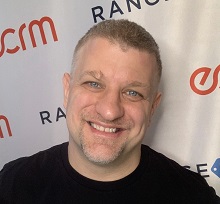
By day, Ruchir Vimawala is a dedicated medical device engineer, navigating the precise, highly regulated world of healthcare technology. By night – and during every spare weekend hour he can squeeze out of the clock – he and his wife Bhavana (who also works at the same medical device company) transform into one of the most tenacious, scrappy, and high-energy food entrepreneurs I’ve come across during my time at ECRM.
As the Co-Founder and CEO of Bhavana Foods, Vimawala holds exclusive U.S. importing and distribution rights for Hocco, The Indian Kitchen, an iconic food brand with an 80-year legacy in India. While balancing a corporate day job while trying to spearhead a nationwide brand launch is a challenge that would exhaust even the most ambitious founders, the couple approach it not as a burden, but as the raw fuel driving their entrepreneurial vision.
The spark for Bhavana Foods was lit during a long-overdue trip back to India following the pandemic. Having lived in the United States for nearly a decade, Vimawala brought his American-born wife Bhavana home to experience the vibrant culinary heritage he grew up with, taking her to Hocco – the nostalgic restaurant chain that defined his childhood.
During that trip, Vimawala experienced an instant revelation: America was missing true, uncompromisingly authentic Indian cuisine. Armed with zero background in food distribution, international trade, or retail sales, he convinced Hocco’s leadership to trust him with their storied brand. He promised them that American consumers were ready for real Indian flavors, vowing he would put their products into homes across the United States.
What followed is a masterclass in modern entrepreneurial scrappiness. From strapping cardboard floor displays to the roof of a 2015 Kia Optima and driving overnight to set up shop in motel rooms, to pulling 100-plus-hour workweeks while maintaining top-tier performance at his engineering job, Vimawala has built Bhavana Foods from the ground up.
Today, that tireless hustle is paying off, culminating in retail victories at ECRM Food & Beverage Sessions where he landed with retail heavyweights like Grocery Outlet and United Supermarkets, as well as a deal with KeHE Distributors via RangeMe.
His story is a testament to the power of unwavering passion, personal connection, and the unstoppable drive of an immigrant chasing the American Dream. You can watch my full video interview with Vimawala below, or listen to it on our podcast, Winning Pitches with RangeMe & ECRM (Episode 63).
The Ultimate Side-Hustle Grind: 100-Hour Weeks, Motel Workstations, and a 2015 Kia Optima
When entrepreneurs talk about "hustle," it often sounds like an abstract motivational buzzword. For Vimawala, hustle is a tangible, daily reality measured in sleepless nights, endless highway miles, and improvised logistically complex operations. Starting a business from scratch requires capital, and rather than hunting for outside investors early on, Vimawala and his wife (who is Co-Founder and for whom the company was named) chose to self-fund their dream directly out of their day-job paychecks.
Reflecting on those early, raw days, Vimawala recalls the effort required to move his very first order. "The first order that I placed was $3,000," says Vimawala. "I picked it up from a warehouse and broke down the pallet. We had this old car, a Kia Optima 2015. We loaded the car up. We didn't have enough space to load the visual displays, so we tied them on top of the roof."
Vimawala and his wife set off across town, visiting local ethnic markets one by one, pitching store owners and celebrating even the smallest $100 consignment invoice. But local victory was only the baseline; to build a brand capable of national scale, Vimawala knew he had to expand beyond his home state of Minnesota.
That expansion meant devising a rigorous schedule that stretched them to their absolute limits:
- Monday through Thursday: Work full-time hours (8 AM to 4 PM or 9 AM to 5 PM) as a medical device engineer, ensuring top performance in the office while managing business tasks.
- Thursday Evening: Immediately after finishing the workday at 4 PM, jump into the car and drive hundreds of miles overnight toward target regional expansion markets like Wisconsin or Illinois.
- Friday: Check into a budget motel, manage day-job engineering tasks remotely from the motel desk, and spend late afternoon and evening hours pounding the pavement to meet local store buyers.
- Saturday & Sunday: Work full days on the ground visiting independent retailers, stocking shelves, pitching store managers, and building local relationships.
- Sunday Night: Drive back overnight to Minnesota, arriving home just in time to start the corporate workweek all over again on Monday morning.
"Working hundred hours is an understatement for me at this point of the time," says Vimawala. “I'm an immigrant. I came to this country about 10 years ago. I live the American dream. This country is a gold mine of opportunities. The more you dig, the more gold you will find."
Even his rule for when he will finally transition away from his full-time engineering career is rooted in practical math and familial responsibility. "I'm a math guy and I want to make sure that my family's supported because my family has supported me throughout,” says Vimawala. “So I want to make sure that before I even take the leap of faith, my family's secure."
Transforming Authentic Heritage into Mainstream Shelf Staples
At the heart of Bhavana Foods' rapid rise is a product line that bridges two distinct consumer worlds: authentic traditional Indian heritage and modern American convenience. Hocco’s products feature clean-label ingredients, 100% vegetarian options, zero artificial preservatives, zero synthetic colors, and a shelf-stable 18-month shelf life.
Initially, Vimawala focused his sales efforts strictly on local ethnic grocery stores, knowing those customers were already intimately familiar with traditional Indian entrees like Chana Masala, Black Lentil, and Paneer (cottage cheese) dishes. However, he quickly realized that staying solely within ethnic markets meant leaving 99% of the total U.S. grocery market on the table.
To bridge the gap between traditional Indian cuisine and mainstream American shoppers, Ruchir recognized that the messaging around Indian food needed to evolve. "Indian food is not spicy, Indian food is flavorful,” says Vimawala. “And that is something that people are acknowledging, and it’s resonating now, especially with the younger generations."
Recognizing that mainstream shoppers often feel intimidated by complex preparation steps or unsure of what side dishes to pair with Indian curries, Bhavana Foods introduced a revolutionary product based on customer feedback: the Combo Meal Kit.
Retailing between $4.99 and $5.49, these shelf-stable combo packs act as the ultimate starter kit for curious consumers:
- Self-Contained Convenience: Each box contains a microwavable bowl, a pack of authentic curry, a pack of cooked rice, a utensil, and a napkin.
- Zero Effort Required: Consumers simply cut the packs open, combine the curry and rice inside the included bowl, microwave, and eat anywhere.
- Versatile Lifestyle Fit: Perfect for busy corporate workers, college students, travelers, or late-night study sessions.
By transforming authentic regional curries into a portable, foolproof meal solution, Vimawala turned a niche cultural staple into a mainstream fast-moving consumer packaged good.

The Art of the Pitch: Kurta Pajamas & Concierge Service
Building a great product is only half the battle; getting retail buyers to notice it in a crowded marketplace requires strong personal salesmanship. When Vimawala set his sights on mass retail via ECRM and RangeMe, he faced off against established corporate brands with massive trade show budgets and high-end booth displays. Lacking a fortune to spend on custom booth fixtures, he realized that his personal identity and energy had to become his greatest promotional asset.
"I don't have fancy booth displays," Vimawala says. "What I'm going to do is I'm going to make myself a product as well. And I always say that: You are your own product. You need to sell yourself first before you sell your product."
To embody the authenticity of the heritage brand he represents, Vimawala wears traditional Indian attire to buyer meetings, which immediately sets him apart and serves as a conversation starter.
Beyond attire, Vimawala developed a high-touch strategy for buyer meetings during fast-paced meetings that take place in the RangeMe Discovery Hub at ECRM sessions. Recognizing that category buyers spend hours moving from one high-pressure 10-minute meeting to the next, he introduced what can only be described as a valet concierge service for retail buyers at this year’s ECRM Center Store Grocery Session:
- Monitoring the Hallways: During meeting breaks, Vimawala keeps an eye on the waiting area to identify his next scheduled buyer.
- Greeting the Buyer: Rather than sitting at his table waiting for the buyer to navigate the room, Vimawala personally walks out to meet them, greets them warmly, and escorts them directly to his table.
- Maximizing Every Second: Escorting buyers adds an extra 15 to 20 seconds of casual interaction before the official clock even starts, making buyers feel genuinely welcomed, respected, and valued.
"Even those extra 10 seconds for me to walk there and bring them back is part of my sales pitch," Vimawala says. "It makes them feel valuable, and I get an extra 10 seconds to pitch my product. It's a full valet concierge service that you are trying to provide them, an experience that you are trying to provide."
Once the buyer sits down at his table, Vimawala avoids jumping straight into an aggressive product pitch. Instead, he uses a structured, highly empathetic meeting blueprint designed to establish immediate rapport:
- The 10-Second Icebreaker: He starts by asking the buyer how their day is going, checking in on their energy, and loosening up the room. "I always believe one thing that I have read somewhere: that you have seven seconds to make a first impression," Vimawala says. "In those seven seconds, if you hook them up, they're going to listen to you completely."
- Needs Discovery: Before pitching his products, he asks the buyer about their store demographics, current category needs, and shelf availability.
- Tailored Solution Pitching: If a buyer represents stores in regions with a low Indian demographic, Ruchir bypasses individual entree pouches entirely and pitches the Combo Meal Kit as a low-risk starter pack.
- Respectful Boundaries: If a product isn't the right fit, he respects the buyer's time, asking for constructive feedback and clear next steps rather than overwhelming them with aggressive hard-selling tactics.
A $50K PO in 7 Minutes & Six-Figure Repeat Business
This distinctive, personal approach to buyer meetings produced great results when Vimawala attended ECRM sessions. In the CPG retail industry, initial 10-minute meetings rarely result in immediate sales; vendors are typically advised to expect months of follow-up conversations, sampling, and vendor-setup paperwork before a purchase order ever materializes. Vimawala shattered those standard expectations during his meeting with a buyer from Grocery Outlet Bargain Market.
"She came to the table and she saw the passion that I had talking about my products," Vimawala recounts. "Out of those 10 minutes, at the seventh minute of that meeting, I was writing a purchase order worth $50,000 on the table!"
Even more impressive is how that trial order converted into long-term velocity. Today, Bhavana Foods generates nearly $200,000 in business every two months with Grocery Outlet alone, backed by enthusiastic texts and photos from everyday shoppers across California praising the food.
That initial Grocery Outlet deal was not the only win from the Session. He met with Albertsons-owned United Supermarkets, which agreed to serve as the anchor account for one of KeHE’s distribution Centers, accelerating Bhavana Foods’ entry into more supermarket chains. This was also helpful in helping the brand land a KeHE golden ticket through its Trendfinders program via a RangeMe Immediate Opportunity submission.
Comparing his early pitch meetings to his current standing, Ruchir notes how dramatic the shift has been. "It has been a complete 180 for me at this point in time because it gave me the confidence that what I'm doing is working," he says. "The whole conversation from 2025 to 2026 has changed. Buyers look at us as a more mature product. And the things that took one year, now probably take a month because they know you are already out there in the market."
Buyer Feedback as a Growth Engine: Adapting in Real Time
One major key to Vimawala’s rapid retail traction is his total lack of ego regarding product design and quick adaptability to retailer needs. Rather than treating buyer objections as rejections, Ruchir treats every piece of retail feedback as crucial market intelligence to refine his business model.
In fact, the flagship Combo Meal Kit itself was born directly out of buyer conversations. When early retail buyers expressed concern that American consumers wouldn't know how to prepare or pair standalone curry pouches, Vimawala went back to his manufacturing partners in India and engineered the all-in-one microwavable combo box. Vimawala applied that same agile responsiveness to retail packaging and display logistics:
Custom Display Shippers
When buyers noted they lacked spare shelf space for a new brand, Ruchir provided standalone floor display shippers so stores could place products in high-traffic endcaps without clearing existing shelf space.
Dual-Tray Case Engineering
Traditional entree cases came packed with 24 units – a commitment too large for smaller retail footprints. In response to buyer feedback, Vimawala redesigned the master shipping box into a perforated, dual-tray inner container holding 12 units. Retailers can easily zip open the dotted line, transforming half a master case into a neat, shelf-ready display tray.
"Those are the small feedbacks that actually pivot your business model quite a bit," Vimawala says. "At the end of the day, you create a product which is fit to their market – not what you originally created, but actually what's going to sell."
Manifesting the Future of Authentic Food in America
Looking toward the future, Vimawala’s ambitions remain sky-high. He isn't interested in maintaining a quiet niche brand; he wants Bhavana Foods to redefine how North America views Indian cuisine.
"Next is big stores, big box stores," Vimawala says. "When people think about Indian food, I want them to think about Hocco. I want to be everywhere. I want to be the face of Indian food here."
With six-figure retail orders rolling in, a growing footprint in premier supermarkets, and an unrelenting work ethic, Vimawala is well on his way to realizing that dream – proving that in the world of entrepreneurship, authentic passion always finds a way to win.