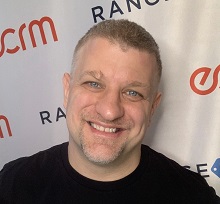
ECRM Fireside Chat: An Inside Look at 7-Eleven’s Quest for the Next Global Brand 3/4/2026

7-Eleven, the world’s largest convenience retailer, is undergoing a massive strategic shift, moving away from its traditional reputation as a "smokes and cokes" destination toward becoming a premier launchpad for the next generation of consumer packaged goods.
The company has established a sophisticated pipeline designed to identify, test, and scale emerging brands. This evolution is driven by a corporate venture arm, led by Matt Bunevich, 7-Eleven's Manager of 7-Ventures & Business Development, who reports directly to the board, ensuring that innovation is prioritized at the highest levels of the organization.
At the core of this strategy is 7-Eleven’s Brands with Heart program, an annual competition that narrows down hundreds of applicants that submit products via RangeMe to a select few who earn the chance to test their products in real-world retail environments. However, scaling within the 7-Eleven ecosystem – which spans over 13,000 stores in North America – requires more than just a unique product. It demands a deep understanding of price pack architecture, franchisee psychology, and the logistical stamina to survive a national rollout.
In this fireside chat moderated by ECRM SVP of Retail Wayne Bennet at the ECRM/retailmediaIQ Convenience Leadership Summit (part of ECRM’s Convenience Session), Bunevich outlines what it takes for brands to work with 7-Eleven.
The ‘Brands with Heart’ program as a gateway to 7 Eleven
ECRM: How does 7-Eleven identify the next big trend before it hits the mainstream?
Bunevich: We’ve institutionalized the search through our "Brands with Heart" program. In 2024 alone, we had over 600 brands apply. Our team narrows that down to about 26 brands that we truly believe have the potential to disrupt their categories. We aren't just looking for a product that tastes good; we are looking for a brand with a soul and a story that resonates with the modern consumer. These 26 winners are then placed in a "test-and-learn" environment of 300 to 400 stores to see if they can actually move off the shelves without the benefit of a massive national ad campaign.
ECRM: Once a brand is in those initial 400 stores, what does the path to 13,000 stores look like?
Bunevich: It’s a phased approach. If a brand performs well in the initial test, we move them to Phase Two, which expands them to 400 to 1,000 stores. If the data shows the product is on fire, we move to national distribution as quickly as possible. But the "Valley of Death" for most brands is the transition from 1,000 stores to 13,000. Many startups aren't prepared for the sheer volume of inventory required or the capital needed to support that kind of growth. We look for brands that have the "dry powder" – the capital – to survive the scaling process.
The Franchise Factor: Grassroots Selling
ECRM: 7-Eleven is unique because of its franchise model. How can a brand use that to their advantage?
Bunevich: This is a hack that many people don't realize. Because we are a franchise-heavy organization, a brand doesn't necessarily have to wait for a corporate mandate. You can literally walk into a local 7-Eleven, speak to the franchisee, and if they like your product, they can have it in their system and ringing up at the register in 10 minutes.
It’s labor-intensive – you’re basically acting as your own distributor – but it’s the best way to build a baseline of data. If you can show a corporate category manager that you are already selling successfully in 50 local franchises, that conversation becomes much easier. You’re proving demand at the most granular level.
Logistics and Shelf Reality: Making the Product Fit
ECRM: You’ve talked a lot about "price pack architecture." Why is the physical size of the box or bottle so critical?
Bunevich: In a 2,000-square-foot store, every inch is a battleground. We have a limited vault (the refrigerated section), usually only about nine doors. If your product requires a specialized peg or if your case size is too big, you’re creating an operational headache for the franchisee.
Take Liquid Death as an example: they recently moved from 24-packs to 12-packs. Why? Because a franchisee doesn't want to store a massive 24-pack in their tiny backroom. A 12-pack is easier to lift, easier to stock, and fits the reordering cycle better. If you make it hard for the person working the midnight shift to stock your product, your product won't be on the shelf.
The Search for the Next Big Hit: Trends and White Space
ECRM: What categories are you currently most excited about?
Bunevich: We are looking for white space. Right now, that’s space age beverages – nootropics and functional drinks like Recess, Day Trip, or Calm. Consumers are looking for more than just hydration; they want mood enhancement or cognitive focus.
The challenge for us is where to put them. Do they go in the water door? The energy drink door? If I put a nootropic in, I have to take a soda out. That’s the high-stakes game we play. Regarding things like CBD or THC, we are staying on the sidelines until there is federal legality. With 47 states and thousands of local jurisdictions, the regulatory risk is too high for a franchise model.
Advice for Founders Pitching 7-Eleven
ECRM: What is the number one mistake brands make when pitching to your team?
Bunevich: They focus too much on macro-level data and not enough on their own story. I have more data than I could ever use; I don't need a brand to tell me that the energy drink category is growing. I need them to tell me why a customer will walk past a Red Bull to pick up their can.
Also, founders often underestimate the cost of being on the shelf. Between slotting fees, distribution margins, and marketing spend, you need a significant war chest. Don't come to us if you're down to your last $50,000. Come to us when you’re ready to partner for the long haul. We want to find the next Celsius, and we have the infrastructure to make that happen if the brand is ready.