Casey's Guest-First Approach Drives its Quest for Innovation & Value 3/31/2026

As the convenience store industry rapidly evolves, Casey’s has emerged as a powerhouse, scaling its operations and refining its identity as more than just a place to fuel up. The company is leveraging its unique position as both a convenience retailer and the fifth-largest pizza chain in the United States to capture new dayparts and consumer occasions.
Leading the charge in the beverage category is Lee Wilburn, a veteran merchant who spent 15 years at 7-Eleven before joining the Casey's team. As the Senior Director of Packaged Beverages, he oversees everything in the vault, and is on a mission to stay ahead of what’s trending in packaged beverages.
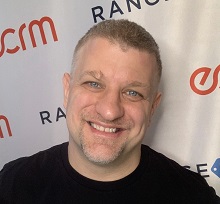
In this Fireside chat with ECRM SVP of Retail Wayne Bennett, held during the ECRM/retailmediaIQ Convenience Store Summit at ECRM’s Convenience Session, Wilburn breaks down the strategic priorities driving Casey’s forward, the emerging trends in functional nutrition, and what it takes for new brands to find a home on their shelves.
The Path to the Vault: Experience and Strategy
ECRM: Before we dive into the strategy, tell us a bit about your background and what your current focus is at Casey’s.
Wilburn: Coming out of college, I was essentially a frustrated coach who probably should have been coaching college basketball. I went looking for opportunities in business and spent 15 years at 7-Eleven, working across both the operations and merchandising sides of the house. Since moving to Casey’s, I’ve toggled back and forth between those two worlds, and I’m currently the Senior Director of Packaged Beverages.
My domain includes everything you would picture in the vault. That ranges from: non-alcoholic beverages, alcohol and liquor – which is a significant portion of our business in the Midwest, ice and ice cream.
ECRM: Casey’s is scaling fast. In your opinion, what is the number one priority you are driving with your suppliers today?
Wilburn: It is all about guest counts and door swings. That is the absolute center of our strategy. We want to drive those counts at a value that is prevailing for the guest. To do that, we lean heavily into several core pillars. These include a differentiated assortment – we work with partners to find exclusive and unique products; a guest-first mentality where every decision is filtered through the needs of the guest first; and prevailing value – ensuring our pricing and offerings resonate with the cost-conscious consumer.
Winning the Occasion: Pizza, Wings, and Breakfast
ECRM: Occasions are critical in the C-store industry. What are the key occasions Casey’s is focused on winning right now?
Wilburn: We all want the fuel occasions, and we have successfully increased our gallons. But for us, the true crown jewel is our pizza. We are currently the fifth-largest pizza chain, and we are actively trying to move up to the number four spot. Once we have the guest in the store for food, our strategy centers around beverages at that prevailing value I mentioned.
ECRM: How does your rewards platform play into this?
Wilburn: We now have 10 million members in our rewards platform. From an execution standpoint, our store teams are incredibly consistent – you would be hard-pressed to visit Casey's and not hear a team member present the rewards program at the register.
ECRM: Are there other dayparts or occasions you are looking to capture?
Wilburn: We are very strong in the evening, whole-pie family occasion. What we haven't historically captured is the "burger, fries, and a drink" occasion or the breakfast occasion as effectively. To address that, we are rolling out a new wings and fries platform. Within about a year and a half, all of our stores will have this wings, sauce, and fries offering to help us capture that next growth segment.
ECRM: What about the breakfast occasion specifically?
Wilburn: We already have a vast breakfast sandwich platform. Right now, our focus in that area is more about kitchen efficiency. Because we do so much from scratch – making our dough live in the kitchen and using whole milk mozzarella – our kitchen teams are very busy. We are looking for ways to remove complexities. For example, instead of having staff slice and dice peppers and onions manually, we are moving to pre-packaged sliced vegetables to save them time.

The Rise of Functional Nutrition in Beverages
ECRM: What macro trends are you seeing, specifically within the beverage category?
Wilburn: The biggest trend is functional nutrition. Guests want their beverages to do something for them. If they are going to take on the calories, they want to know if they are getting fiber, protein, or caffeine in return.
We are leaning heavily into these specific areas: for functionality – fiber, protein, caffeine and prebiotics; for health conscious – zero sugar, rapid hydration; and for innovation – functional carbonated soft drinks and protein coffee. We expect to see protein and coffee combinations enter our beverage sets fully in 2026.
Advice for Brands: How to Pitch Casey’s
ECRM: If a founder or a brand had 30 seconds to pitch you, what should they focus on?
Wilburn: I want to hear how you are going to delve into the center of our strategy. Specifically: How will you drive guest counts? How does your product provide incrementality to the category? Are you filling a white space, or are you in a growing and emerging category? Where are you in your growth segment?
ECRM: What is a common mistake brands make that leads to failure?
Wilburn: Coming in before you are ready and not understanding your own brand culture. Often, brands don't know exactly where they should live in the assortment. For instance, if you have a water product with caffeine, does it live with water or energy drinks?
Also, we don't want tail brands. If a brand is just trying to be number eight or nine in a category, they will always stay there. We want partners who are ready to come in and compete in the middle to upper echelon of their categories.
Supply Chain and the 'Direct' Model
ECRM: Can you talk about Casey’s supply chain and what suppliers need to understand about your operations?
Wilburn: We utilize a direct model because we like to control our own destiny. We feel this model allowed us to weather the pandemic more effectively. Especially with new or innovative brands, we prefer to bring them in through our direct distribution center channel. We have a direct line of sight on performance, and we've noticed that when products go on other trucks, they often do not perform as well.
We are also implementing a new model for ordering. Historically, we depended on store managers to place orders, but we’ve taken that out of the equation to improve forecasting and minimum inventory orders.
ECRM: Has this new model improved your out-of-stock situation?
Wilburn: We have seen a considerable decrease in out-of-stocks. You can see it clearly in the data. It also helps level off our truck loads, which makes labor and capital expenses much more reasonable. We still face some growing pains with calibration – like when a store team stocks a display incorrectly, which messes up the inventory count – but it is definitely helping.
Private Brand Strategy and White Space Opportunities
ECRM: Casey’s has a strong private brand presence. What is the criteria for a Casey’s brand item?
Wilburn: Our goal is to be on par with or better than the national brand in terms of taste. We then provide that at a prevailing value for our cost-conscious guests. When it comes to private brands, we use a "test and learn" approach. We look for emerging and growing categories; products that provide a special occasion; and a strong brand fit.
ECRM: Where do you see white space for future growth?
Wilburn: I definitely see white space in sparkling water, enhanced waters, and flavored waters. On the alcohol side, ready-to-drink products are a major opportunity that hasn't been fully tapped yet. Additionally, rapid hydration sports drinks with added functionality are a key focus.
Casey’s Innovation Summit: Test, Prove, and Scale
ECRM: You are entering year three of your Innovation Summit. How does that program work for new brands?
Wilburn: We target items from forums like this and bring them to our home office in Ankeny. We give them a tour of our facilities, our DC, and our food platform, and we talk to them about Casey's rewards and delivery platforms.
Our philosophy is test, prove, and scale. Testing usually lasts 6 to 12 weeks using specific test and control stores. We agree on what success looks like for both parties. Once verified, we scale. We currently use a set of 10+ stores in Indiana as our primary testing ground before rolling products out to the rest of the chain during our March planogram updates. (Learn more about Casey's Innovation Summit here.)
ECRM: As Casey’s continues to acquire other chains, will buying remain centralized?
Wilburn: Yes. We are one company. Whether we are negotiating with Pepsi or Red Bull, we maintain the same costs and retails throughout the entire organization.